%201.avif)
Why Unified Lending Platforms Are Replacing Patchwork Systems
.png)
Credit policies or market conditions aren’t slowing down lenders. The systems running behind the scenes are the primary reason for the drag.
Most lenders today operate on what we call patchwork systems: a mix of legacy core banking software, third-party origination tools, separate servicing platforms, standalone analytics dashboards, and homegrown Excel workarounds duct-taped together with manual handoffs and API integrations that break every quarter. The result? A technology mixture held together by middleware and hope.
It works. Barely.
Unified lending platforms solve this by design, not by adding another tool to the stack, but by replacing fragmented point solutions with a single, integrated architecture that manages the entire loan lifecycle from origination to servicing to analytics.
Let’s find out why patchwork systems are collapsing under their own weight, what makes unified platforms fundamentally different, and how lenders can transition without grinding operations to a halt.
What Are Patchwork Lending Systems
A typical patchwork lending system (with automation) looks like this:
Legacy core banking system (handles accounts, transactions). Third-party loan origination software (manages applications, underwriting). Separate loan servicing platform (tracks repayments, collections). External credit bureau integrations (manual or semi-automated). Standalone document management system (stores loan files). Excel-based reporting (because none of the platforms talk to each other properly). Custom scripts or middleware to move data between systems.
Each tool does its job reasonably well in isolation. But together? They create operational chaos.
Data doesn't flow automatically. Teams spend hours reconciling records. Customer information exists in five different places with five different versions of the truth. Building new products means negotiating with three vendors and writing custom code to bridge gaps.
It's the operational reality for most NBFCs, fintechs, and mid-sized banks today.
Why Patchwork Systems Exist in Most Lenders
Most lenders didn't choose fragmentation. They inherited it.
Here's how it happens:
Many lenders started with a core banking system built in the 1990s or early 2000s. It works for basic functions such as deposits, withdrawals, and account management, but wasn't designed for modern lending workflows. Rather than rip it out (expensive, risky, time-consuming), lenders add new tools on top.
A few years ago, buying specialized point solutions made sense. Need better organization? Buy an LOS. Need better servicing? Add a separate platform. Each purchase was rational in isolation. But nobody planned for how they'd all work together.
When lenders merge, they inherit each other's tech stacks. Suddenly, you're running two origination systems, three servicing platforms, and trying to consolidate portfolios across incompatible databases.
Launching a new BNPL or personal loan product often means tapping a niche vendor, further siloing data, and adding another integration layer.
The problem compounds over time. What started as a manageable two-system setup becomes a six-system maze within five years.
Hidden Costs of Fragmented Lending Technology
Patchwork systems don't just slow you down. They bleed money, risk, and opportunity.
When loan data lives in five different places, "truth" becomes subjective. Customer addresses exist in three versions. Outstanding balances don't reconcile. Risk assessments pull from stale data because one system hasn't synced yet. This creates inaccurate reporting, compromised risk assessment, and compliance exposure.
Every additional system adds licensing fees, hosting costs, and vendor management complexity. But the real cost is invisible: Technical debt amounts to 20–40 % of the value of their entire technology estate before depreciation, creating a substantial drag on budgets and innovation. Integration middleware isn't cheap. Neither are the developers required to keep it from breaking.
Customers don't care about your backend architecture. They care about fast approvals and accurate information. But when your origination system doesn't talk to your servicing platform, customers get inconsistent updates. In an era where borrowers expect instant decisions, a 24-hour delay caused by manual data syncing is a lost customer. In Australia, 99.3% of customer-bank interactions are now digital. Patchwork systems can't deliver seamless experiences.
Manual handoffs between systems are breeding grounds for human error and compliance breaches. Every reconciliation step is an opportunity for mistakes. Every mistake is a potential audit finding.
Launching new lending products should take weeks, not quarters. But in a patchwork environment, every new product means custom integration work, vendor negotiations, and testing cycles across multiple systems. Competitors with unified platforms ship products while you're still mapping data flows.
What Is a Unified Lending Platform
A unified lending platform is a single, integrated software architecture that manages the entire loan lifecycle, including origination, underwriting, servicing, collections, analytics, and reporting within one system.
Not "connected systems." Not "integrated platforms." One platform.
Instead of building separate tools and trying to make them talk to each other, unified platforms are designed from the ground up with a shared data model, common workflows, and native integration across every lending function.
What that means in practice:
Customer data entered once, available everywhere. Loan applications flow automatically from origination to servicing. Real-time portfolio visibility across all products. Consistent audit trails without manual reconciliation. Reporting dashboards that pull from a single source of truth.
Modern unified platforms are also cloud-native and API-first, which means they're built for scalability, flexibility, and integration with external systems (credit bureaus, payment gateways, regulatory reporting tools) without custom middleware.
This is what lending intelligence looks like when it's working: connected decision layers, unified data, and automation that eliminates operational drag.
How Unified Platforms Transform Lending Operations
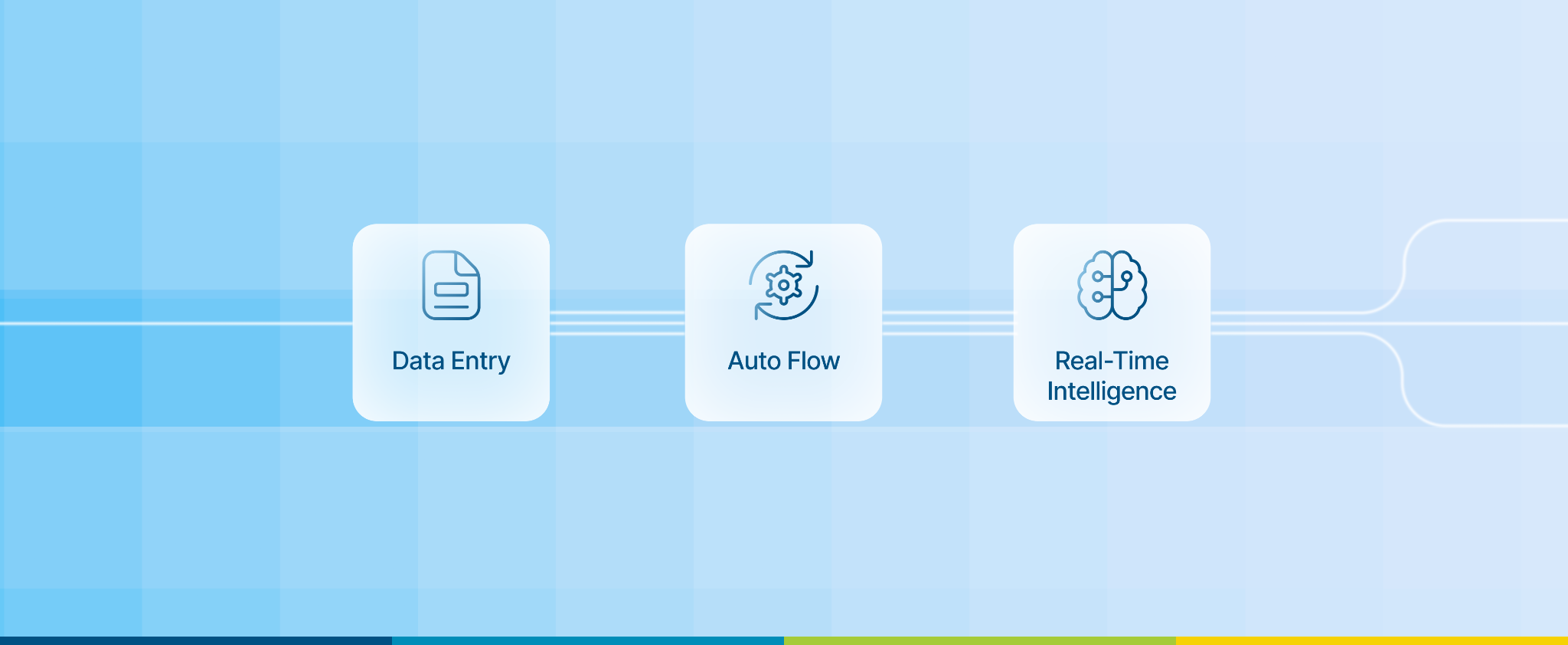
When lenders move from patchwork to unified, the change shows up across the entire operation.
Business users can modify workflows, adding credit rules, adjusting approval criteria, across the entire lifecycle without waiting for development cycles. Applications no longer stop at system boundaries. Credit checks, document verification, and underwriting happen automatically within the same platform.
Loan data flows directly from origination into servicing. Repayment schedules populate automatically. Payment processing, collections triggers, and balance updates happen in real time. Customer service teams see the complete loan history in one view.
Launching a new lending product becomes a matter of configuration, not coding. Configure workflows, pricing rules, and approval criteria within the platform. Launch happens in mere weeks.
Together, these capabilities create what patchwork systems can't: operational efficiency at scale.
Business Benefits of Unified Lending Platforms
The operational improvements translate directly into business outcomes.
- Reduced cost-to-income ratio: By eliminating redundant vendors and automating manual tasks, operational costs plummet. One platform means one vendor relationship, one licensing model, one support contract.
- Improved data accuracy across teams: By using a single source of truth, when a customer updates their contact info or makes a payment, the change reflects globally. There's no "reconciliation" needed because there are no disparate databases to reconcile.
- Superior risk management: Real-time data flow enables responsible lending. You can identify early warning signs of default by analyzing cross-functional data points that siloed systems would miss. This supports better credit decisions and portfolio health.
- Faster time to market: New products, new geographies, new customer segments—all become easier when your platform supports flexibility without requiring custom code.
- Scalability without complexity. Patchwork systems break under volume. Unified platforms scale cleanly. Whether you're processing 100 loans a month or 10,000, the architecture holds.
Key Capabilities to Look for in Unified Platforms
Not all platforms calling themselves "unified" actually are. Here's what to verify:
You should be able to turn on specific modules (like Collections) as needed, but they must natively share the same core engine and data model. Ask vendors: "Where does loan data live after origination?" If the answer involves data replication or ETL processes, it's not truly unified.
The platform should handle origination, underwriting, servicing, collections, and reporting natively, not through bolt-on modules or third-party integrations.
Product heads should be able to define new lending products with different terms, pricing structures, and approval workflows, without heavy reliance on IT or vendor customization.
Dashboards should reflect current portfolio status, not yesterday's batch run. Reporting should pull directly from operational data.
Even unified platforms need to integrate with external systems like payment gateways, credit bureaus, and accounting software. API-first design makes this seamless while maintaining the unified core.
Complete, immutable audit logs should be available by default. Automated regulatory reporting and role-based access controls aren't add-ons. They must be basic requirements.
Platforms like Finspectra are built around these principles. Instead of connecting disparate tools, Finspectra's Prizm Lending Suite delivers origination, servicing, portfolio management, and analytics within a single architecture, designed specifically for modern lenders who need speed, scale, and control.
How Lenders Can Transition from Patchwork to Unified
The biggest objection to replacing patchwork systems is always the same: "We can't shut down operations to migrate."
You don't have to.
Many successful lenders follow what's known as the Strangler Pattern, a gradual replacement strategy that minimizes risk.
Instead of migrating your entire portfolio overnight, launch new lending products on the unified platform. Test workflows, train teams, and prove ROI before touching legacy loans. First go-live for a specific product line often happens within 6–8 weeks with modern low-code platforms.
Keep servicing active loans on existing systems while originating new loans on the unified platform. Over time, as old loans mature, the legacy system shrinks naturally.
If you need to move existing portfolios, do it by product line or loan vintage. Migrate one segment, validate data accuracy, then move the next. Complete transitions typically take 3–9 months, depending on portfolio complexity.
Most unified platform providers offer migration assistance for data mapping, transformation scripts, and validation testing. Use it. Don't build migration tools in-house.
The key is treating migration as a strategic project, not an IT task. Executive sponsorship, clear timelines, and defined success metrics make the difference between smooth transitions and stalled implementations.
Future of Lending Technology Architecture
The shift from patchwork to unified isn't just happening; it's accelerating.
Cloud-native infrastructure is becoming standard. On-premise deployments are being replaced by cloud platforms that offer better scalability, security, and disaster recovery without capital expenditure.
AI and automation are moving from edge cases to core workflows. Credit decisioning, fraud detection, collections optimization: these aren't future use cases. They're active today. But they only work well when data is unified and accessible.
Embedded lending is blurring product boundaries. Lenders are partnering with e-commerce platforms, SaaS providers, and marketplaces to offer financing at the point of sale. These integrations require flexible, API-driven platforms.
Regulators increasingly expect real-time reporting, complete audit trails, and data accuracy. Patchwork systems struggle to meet these standards. Unified platforms make compliance native.
The lenders who win in this environment won't be the ones with the most systems. They'll be the ones with the most capable single platform.
The future belongs to what we call the "Autonomous Lender", where AI doesn't just assist but orchestrates the lending journey. But AI is only as good as the data it consumes. Patchwork systems provide noisy, fragmented data. Unified lending platforms provide the clean, structured foundation required to fuel the next generation of AI-driven credit models.
Conclusion
Patchwork lending systems weren't bad decisions when they were made. They were rational responses to immediate needs.
But the operating environment has changed. Customer expectations have shifted. Regulatory requirements have tightened. Competitive pressure has intensified.
And patchwork systems can't keep up.
Unified lending platforms solve the architectural problem at the root by replacing fragmentation with integration. They deliver faster origination, seamless servicing, real-time analytics, and compliance confidence within a single system.
Finspectra's Prizm Lending Suite is purpose-built for this transition, offering end-to-end loan lifecycle management, configurable product support, and API-first architecture that scales with your business.
Ready to see how unified lending works? Talk to our lending platform experts or request a Prizm walkthrough.
FAQs
- How long does it take to move from patchwork to unified systems?
Migration timelines vary based on portfolio size and complexity. A phased transition typically takes 3–9 months for complete migration, but lenders often see first go-live for a specific product line within 6–8 weeks using modern low-code platforms. Starting with new products shortens the time to value significantly.
- Can unified platforms support multiple lending products?
Yes, modern unified platforms are designed for multi-product flexibility, ranging from personal loans, business loans, vehicle finance, and mortgages, within the same system using customized workflows and pricing rules for each product line.
- What ROI can lenders expect from unified lending platforms?
Lenders typically see 30–50% reductions in operational costs, 20% improvement in approval rates due to better data quality, and measurable improvements in portfolio performance and customer retention. Most realize these gains within 18 months, with some seeing immediate impact in newly launched product lines.
- Do unified lending platforms reduce IT maintenance costs?
Absolutely. By consolidating 5–10 different vendor contracts and integration layers into one platform, organizations significantly reduce technical debt and the number of specialized IT staff required to keep systems running, often cutting IT maintenance spend by 25–35%.
- How do unified lending platforms improve data accuracy across teams?
Lending platforms ensure data accuracy by maintaining a single source of truth. When customer and loan data exist in one database instead of being synchronized across multiple systems, discrepancies disappear, and teams always work from the same information. There's no reconciliation lag, no version conflicts, and no subjective truth.
.png)

.png)
.png)


