%201.avif)
How Intelligent Loan Management Systems Create a Competitive Edge
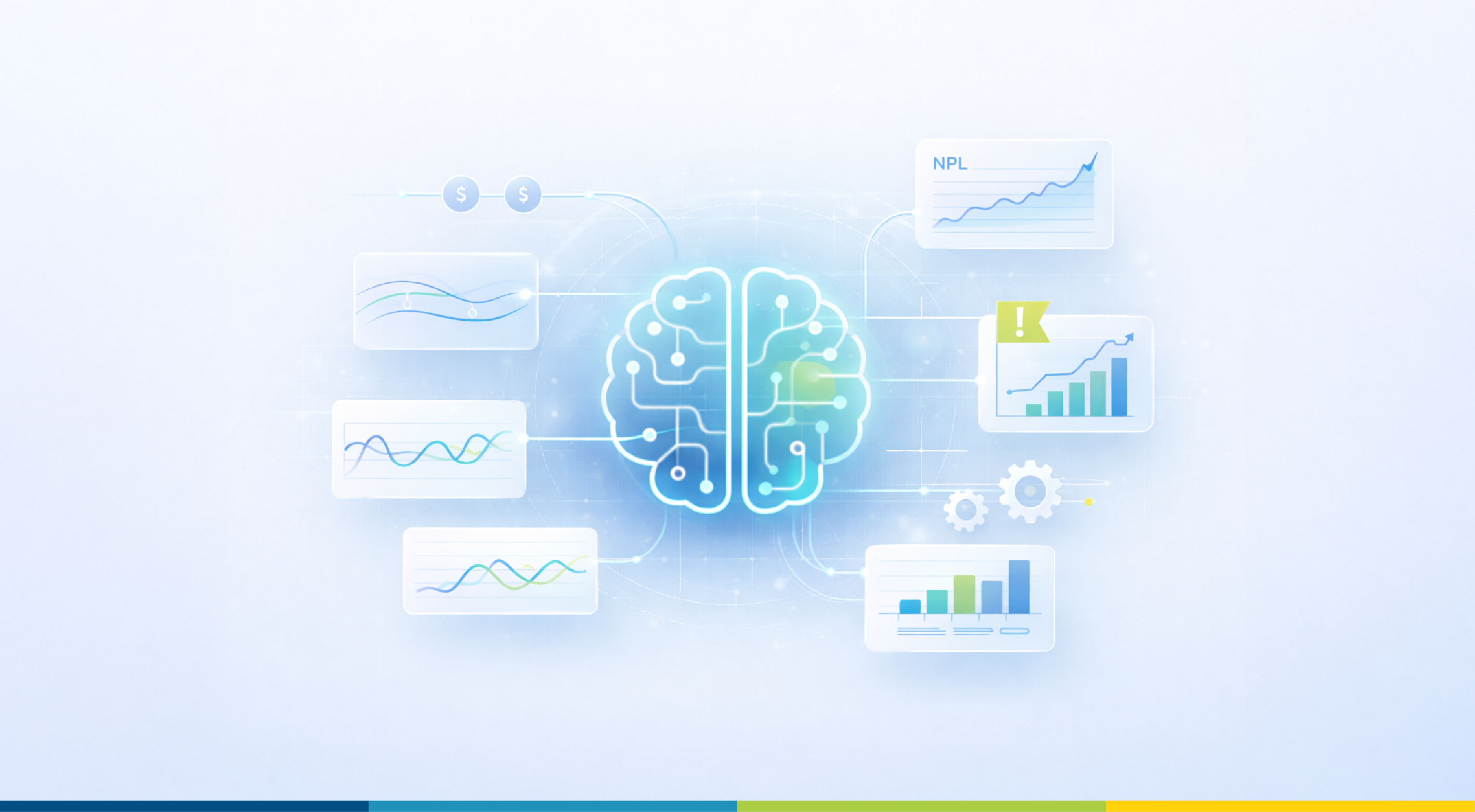
To understand what's holding most lenders back, don't look at their rates or capital. Look at their systems.
Loan portfolios that once demanded dozens of spreadsheets and quarterly risk reviews now require real-time visibility, automated workflows, and predictive intelligence. The loan servicing software market is projected to grow from $3.91 billion in 2025 to $9.89 billion by 2033 at a 12.3% CAGR, which is evidence that lenders are replacing systems designed for a different era.
Intelligent loan management systems are now the foundation of competitive advantage.
This guide explores what makes loan management systems intelligent, how intelligence translates to measurable outcomes, and why lenders who modernize win.
What Makes a Loan Management System Intelligent
Intelligence isn't about having AI. It's about what the system does with data.
Intelligent systems consolidate borrower information, payment histories, covenant compliance, and risk metrics into a single source of truth. No data is scattered across platforms.
Rules engines evaluate portfolio changes automatically, triggering covenant breach alerts, flagging at-risk borrowers before missed payments, and routing exceptions appropriately.
Machine learning analyzes patterns across loans, identifying early warnings. This same intelligence extends into payment operations. The Mordor Intelligence report states that integrations with real-time payment systems and automation tools enable up to 95 % straight-through cash application, reducing manual intervention and accelerating cash visibility.
Instead of batch processing, intelligent systems update balances, recalculate interest, process payments, and adjust risk scores continuously.
Servicing teams, compliance officers, and portfolio managers work from the same live data. Changes cascade instantly across the platform.
The result: lenders see portfolio health at any moment, respond to risks proactively, and operate without manual reconciliation.
Why Traditional Loan Management Systems Limit Growth
Legacy infrastructure wasn't built for modern lending complexity.
Origination, servicing, and collections data live separately. Portfolio managers piece together reports manually with outdated information.
Systems run overnight updates. Payment reconciliations happen daily. Risk calculations refresh weekly. Information reaches decision-makers after market conditions change.
Covenant monitoring requires spreadsheet reviews. Exception handling relies on email chains. Compliance reporting involves extracting and rebuilding data manually.
Without automation, servicing costs per loan rise as portfolios expand, weakening efficiency and profitability.
Traditional systems identify problems after they occur. Borrowers default before systems flag risk. Covenant breaches surface weeks late. Lenders can't scale profitably on legacy infrastructure.
Key Capabilities of Intelligent Loan Management Systems
Automated payment processing systems handle allocation, interest recalculation, escrow disbursements, and adjustments without intervention. Financial covenants are tracked automatically. Systems flag violations instantly and trigger workflow responses.
Real-time dashboards track non-performing loans, charge-off rates, yield, delinquency trends, and concentration risk. AI updates borrower risk profiles based on payment behavior, income, spending, and economic signals.
According to McKinsey Global Banking Annual Review 2025, banks adopting AI could cut down gross costs by 70%. When you offset this with technology cost, aggregate gross reduction can be up to 20%.
Regulatory reporting, audit trails, and documentation are handled systematically. Predictive models flag at-risk borrowers before missed payments. Personalized outreach can lead to 20–30% higher response rates.
These capabilities of intelligent loan management systems create operational leverage.
How Intelligence Improves Loan Servicing and Collections
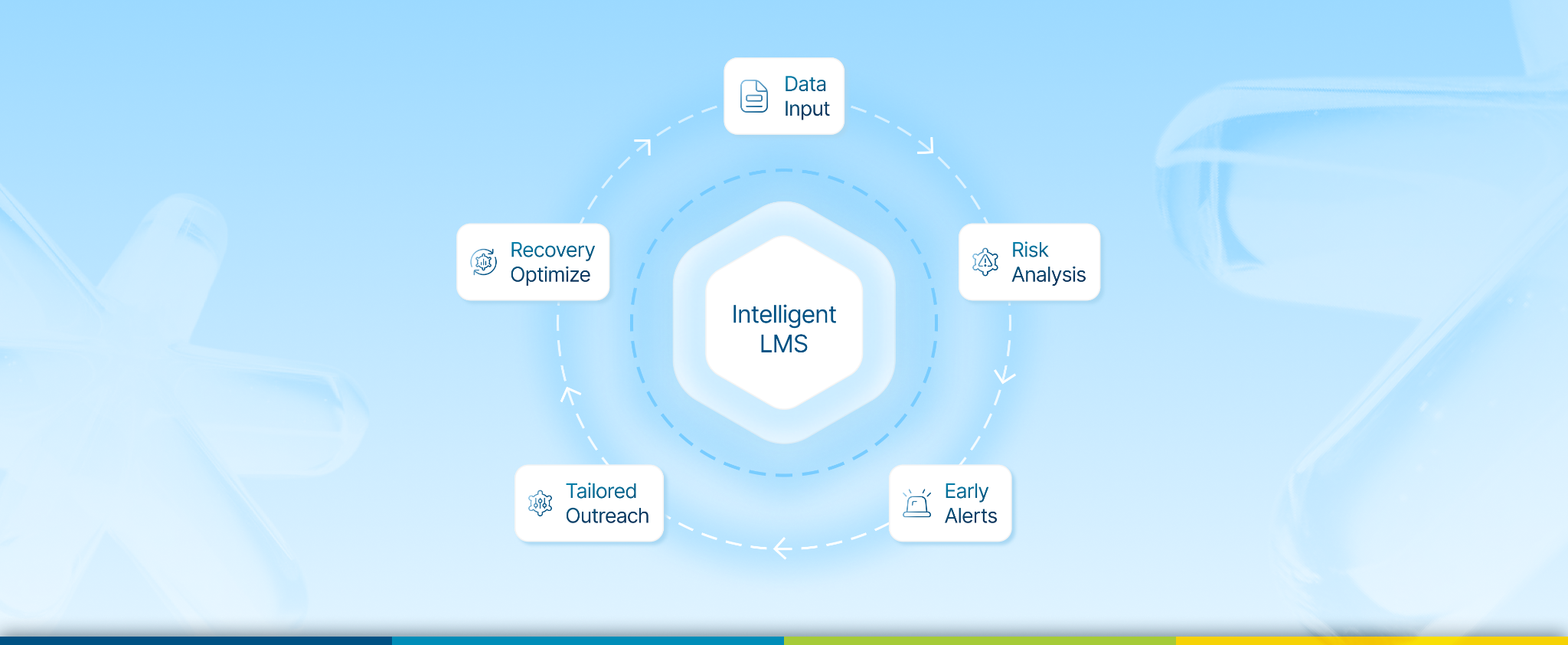
Servicing and collections deliver measurable intelligence impact.
AI analyzes income trends, spending behavior, and economic indicators to identify at-risk borrowers often before their first missed payment. Early intervention prevents losses.
Instead of generic sequences, systems tailor outreach based on borrower profiles, adjusting timing, channel, tone, and offers dynamically.
High-risk accounts trigger human review, while low-risk delinquencies receive automated reminders. Mid-tier cases route to specialized teams. No manual triage is needed.
Systems analyze borrower cash flow and propose repayment structures maximizing recovery while minimizing default risk.
Managers see updated metrics, recovery rates, contact success, promise-to-pay conversion, cure rates, and continuously. They adjust strategies based on current performance.
Lenders using AI-powered processing report can increase accuracy while drastically reducing processing times. These are structural advantages that provide a competitive edge for online lenders.
Competitive Advantages for Modern Lenders
Commercial lending now competes on speed, control, and precision. Margins remain sensitive to cost leakages, credit losses, and operational drag. Lenders that modernise core processes gain advantages that show up directly in portfolio performance.
- Operational Efficiency: Automation eliminates repetitive tasks. Staff focus on complex underwriting and relationship management.
- Faster Decisions: Real-time data enables instant credit decisions, same-day modifications, and immediate covenant waivers.
- Superior Risk Management: AI-powered systems achieve better accuracy in credit risk prediction. Better assessment means lower defaults and optimized returns.
- Scalable Growth: Intelligent systems handle expansion without proportional cost increases, maintaining strong efficiency ratios.
- Enhanced Compliance: Automated reporting and monitoring reduce risk.
Real-time updates, automated reminders, and proactive offers create satisfaction, driving retention. These measures in default rates, operating ratios, portfolio yields, and customer value.
Role of AI and Data in Loan Management
Loan management has shifted from rules-based processing to data-driven decision systems. AI does not replace credit judgment. It expands it by analysing scale and patterns that no human team can process consistently.
NLP and OCR automate extraction, classification, and verification, reducing verification time. Machine learning evaluates thousands of data points, incorporating alternative data. Models flag at-risk borrowers based on patterns enabling intervention before defaults.
AI monitors transactions continuously, and it can immediately flag suspected fraudulent transactions. Analytics recommend optimal strategies based on profitability models and risk-adjusted returns. AI interprets regulatory changes and automatically adjusts processes.
Platforms like Finspectra embed AI throughout the loan lifecycle, creating unified intelligence to improve decisions at every stage.
How Lenders Can Transition to Intelligent Systems
Moving to intelligent loan management rarely succeeds through large, one-time replacements. Progress comes from disciplined sequencing. Lenders need clarity on where friction exists, what data gaps constrain insight, and which processes generate the highest operational cost or risk exposure.
Successful transitions balance technology change with organisational readiness. Platforms such as Finspectra support this shift by allowing lenders to modernise incrementally, without disrupting active portfolios or compliance obligations.
- Start with Assessment: Identify manual processes, data silos, workflow bottlenecks. Quantify inefficiency costs.
- Prioritize Quick Wins: Begin with high-impact improvements automated payment processing, real-time dashboards, and covenant alerts. Build momentum.
- Establish Data Foundations: Clean and centralize data before deploying AI. Unified architectures are prerequisites for intelligence.
- Adopt Modular Platforms: Cloud-native, API-first systems integrate with existing infrastructure while enabling gradual legacy replacement.
- Build Internal Capabilities: Train teams on new platforms. Intelligent systems augment human judgment. Staff need skills to interpret analytics.
- Measure and Iterate: Track metrics before and after processing times, error rates, cost per loan, default rates, and compliance incidents.
Modern platforms deliver measurable ROI quickly through faster approvals, lower costs, and reduced defaults.
Future of Loan Management Technology
The next phase of lending technology focuses less on visibility and more on anticipation. Systems evolve from reporting past events to guiding actions before risk crystallizes or value erodes.
Lenders that invest early in adaptive infrastructure gain optionality. They can absorb regulatory change, integrate new data sources, and scale portfolios without structural strain. Institutions that delay modernization face widening gaps in cost efficiency, response time, and risk control as intelligent systems become baseline capabilities rather than differentiation.
Three main trends are identified to define the next evolution:
- Continuous Intelligence: Loan management shifts from periodic analysis to constant optimization. Systems won't just report what happened, they'll predict what will happen and recommend proactive actions.
- Embedded AI: Intelligence becomes invisible infrastructure. Risk scores update automatically. Collections strategies adjust based on real-time behavior. Compliance rules evolve with regulations, all without manual intervention.
- Ecosystem Integration: Platforms connect seamlessly with core banking, payment processors, credit bureaus, fraud detection, and regulatory reporting. Data flows freely across the lending ecosystem.
Lenders building on intelligent infrastructure today position themselves to adopt these capabilities as they emerge. Those delaying face widening competitive gaps.
Conclusion
Competitive advantage in lending isn't about capital or rates. It's about who operates most efficiently, manages risk most precisely, and serves borrowers most effectively.
Intelligent loan management systems deliver through unified data, automated workflows, predictive analytics, and continuous optimization. The difference between modern platforms and legacy systems is structural, not incremental. Lenders using intelligent systems report lower operational costs, fewer defaults, faster collections, and better efficiency.
Finspectra's Prizm Lending Suite delivers connected intelligence across origination, servicing, collections, and portfolio management, transforming operations from reactive to predictive.
Ready to build a competitive advantage? Book a demo of Prizm Suite.
FAQs
1. Can intelligent loan management systems scale across portfolios?
Yes. Cloud-native platforms handle portfolio expansion without proportional infrastructure costs. Automation enables larger volume servicing with existing teams, maintaining low cost-per-loan metrics while growing. Scalability is a core design principle of modern systems.
2. How do loan management systems support regulatory compliance?
Through automated monitoring, real-time reporting, and complete audit trails. Systems track covenant compliance, generate regulatory reports automatically, and flag violations instantly. AI reduces compliance document review from days to 15 minutes while improving accuracy.
3. Are intelligent systems suitable for legacy core integration?
Yes. Modern platforms use API-first architectures, integrating with existing core banking systems. Modular deployment allows gradual legacy component replacement without disruptive rip-and-replace projects, reducing implementation risk while enabling modernization.
4. How do lenders measure ROI from loan management platforms?
Track operational metrics: processing time reductions, cost per loan, default rate improvements, compliance incident decreases, and productivity gains. Most lenders see measurable ROI within 6–12 months through cost savings and efficiency improvements.
5. What skills are needed to operate intelligent loan systems?
Basic technical literacy, data interpretation, and workflow management skills. Modern platforms feature intuitive interfaces for lending professionals, not IT specialists. Training typically takes weeks with ongoing support from platform providers.
.png)

.png)
.png)


