%201.avif)
How Intelligent Loan Origination Software Cuts TAT and Eliminates Processing Delays
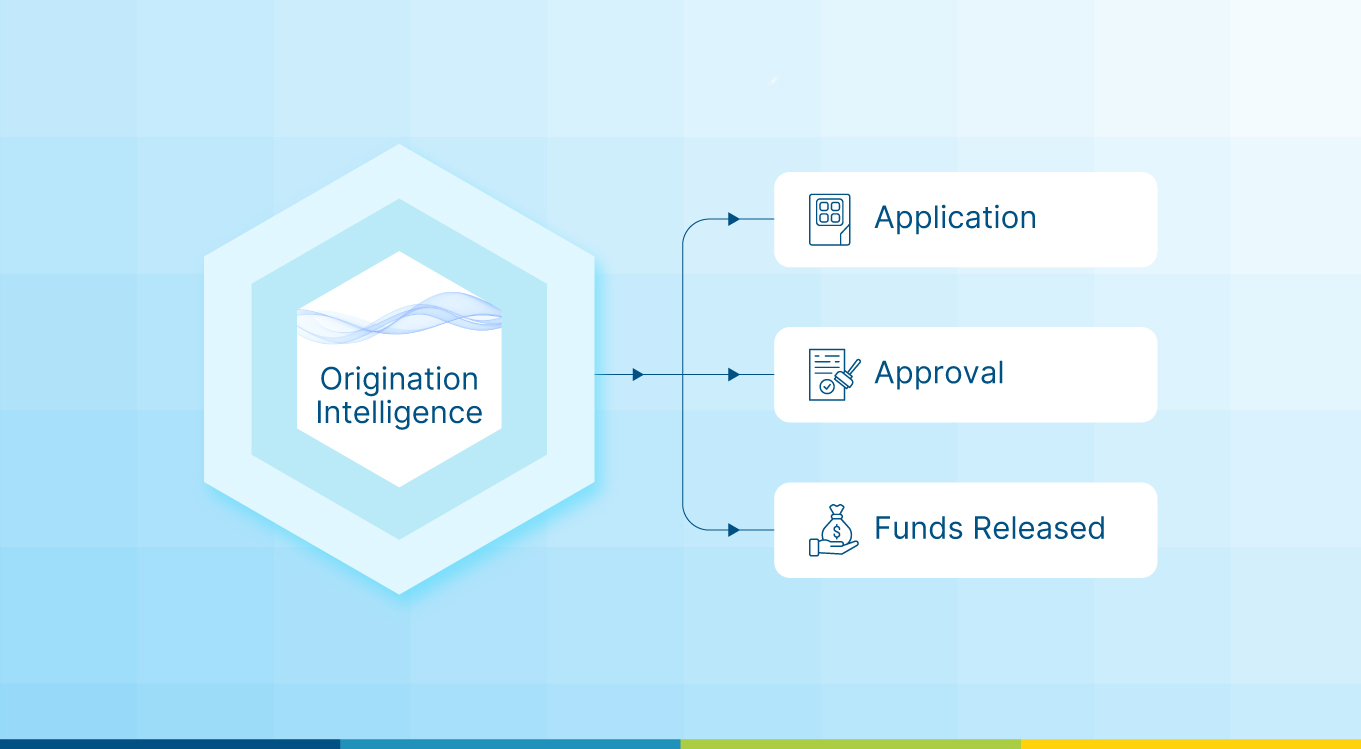
A borrower applies for a working capital loan at 10 AM. By 4 PM, funds hit their account. Six hours.
Not long ago, that same loan would've taken 3-5 days. The application would sit in queues. Files would bounce between departments. Documents would get lost. Every handoff added hours.
The difference isn't automation. It's intelligence.
Most lenders have automated parts of their loan process. But automation alone doesn't eliminate delays; it makes them happen faster. The bottlenecks remain: manual routing, inconsistent evaluations, document exceptions, and underwriters chasing data.
Intelligent loan origination software changes the equation. It doesn't just move applications through steps. It thinks through each step. The result? Loan turnaround time (TAT) drops, delays vanish, and teams stop firefighting exceptions.
Why Loan Processing Still Gets Stuck
Most loan backlogs come from how readiness is assessed across stages.
- Manual re-entry: Data gets typed into applications, then retyped into credit systems, then retyped into core platforms. Each handoff introduces errors and burns hours.
- Fragmented verification: Teams log into separate portals for KYC, credit bureaus, and document checks. Each system confirms its own requirements. None confirms that the loan as a whole is ready.
- Sequential workflows: Traditional systems move step by step. One stage finishes. The next begins. Context is lost at handoffs. Small delays compound when stages wait for confirmation.
These become strategic risks. Slow origination means missed opportunities, especially when competitors are aggressively trying to gain customers.
Our in-depth guide on Loan Origination Software gives you clear idea of what you can expect from an LOS.
What Makes Loan Origination Software "Intelligent"
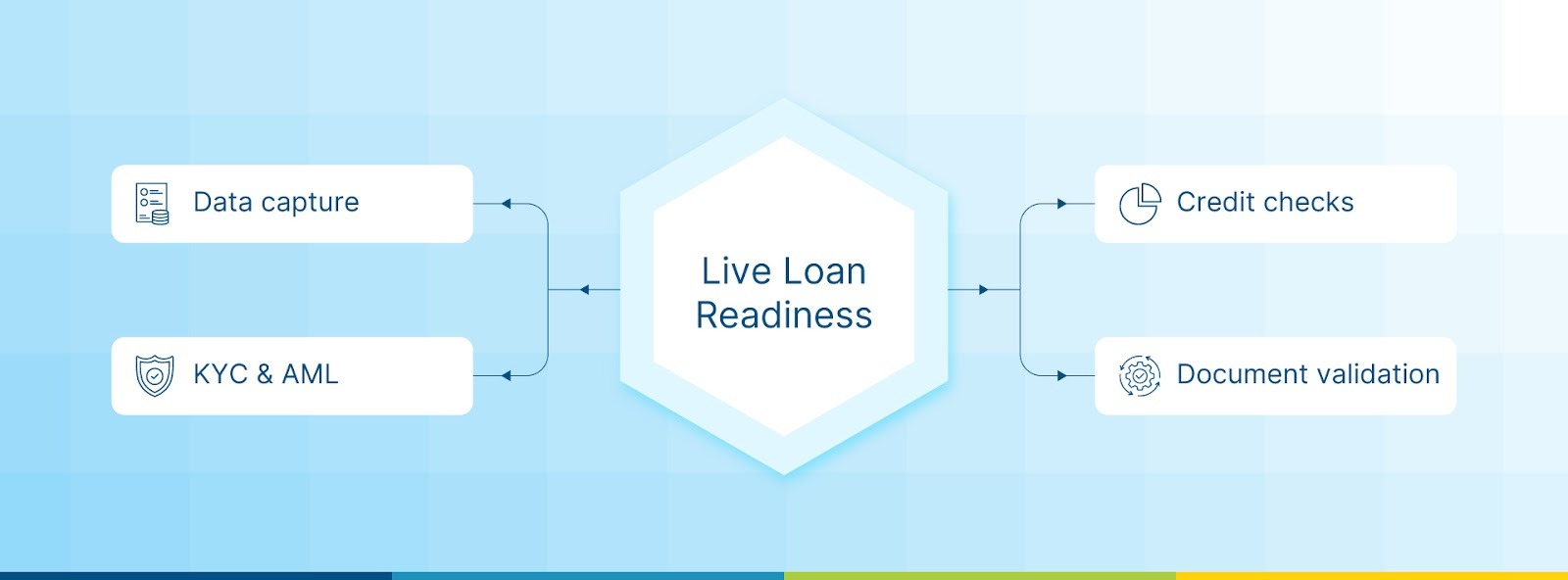
Intelligence in LOS isn't about flashy dashboards. It's about changing how readiness is defined:
- Automated data capture: The system uses OCR and API integration to pull data from tax returns, bank statements, and ID documents instantly. It reads, spreads, and validates data, eliminating manual entry.
- Single authoritative record: All borrower data, credit decisions, and compliance checks live in one place. Teams process loans with a complete, current view, not reconciled snapshots.
- Continuous readiness validation: Intelligent systems validate as data arrives. Missing inputs surface immediately. Loans progress only when dependencies are satisfied.
Multi-threaded workflows, KYC, credit checks, and validation run in parallel like multi-threading in software. While one process pulls credit reports, another verifies collateral. Context is preserved at every step.
This shift removes rework loops and replaces waiting with clarity.
How Intelligence Cuts TAT in Real Terms
The Turn Around Time is an important metric that converts an anxious borrower into a purpose-driven customer. No one wants to sit around for days wondering whether the loan is approved and whether the approved loan will be disbursed. Here’s how intelligence cuts TAT:
Pre-fill validation catches incomplete forms. Identity verification and AML checks run in parallel. 2 minutes vs. 2+ hours.
Bureau pulls from Experian, Equifax, and TransUnion happen automatically. Underwriters review insights, not raw data. 35 minutes vs. 6+ hours.
eSign triggers post-approval. Core system integration releases funds without manual handoff. 1 hour vs. 1+ day.
A process that took 3-5 days now closes in 6-8 hours.
The Compounding Effect of LOS Intelligence
When TAT drops, everything else improves:
- Lower post-approval drop-off: Borrowers disengage when momentum breaks. According to Deloitte research, a significant portion of borrowers reconsider or abandon their loan applications when funding timelines extend beyond their expectations, even after approval has been granted. Faster origination keeps confidence intact and reduces approved loans that never reach disbursement.
- From admin to advisor: When software handles data entry, document chasing, and compliance checks, underwriters focus on risk quality and relationship building. Teams shift from processing files to structuring deals.
- Efficient scaling: Intelligent software handles growing loan volumes without proportional increases in staff or resources.
- Cleaner handoff to disbursement: Disbursement delays often begin in origination. When approvals are complete with verified, consistent data, funding flows without revalidation.
When you understand why a modern LOS must go beyond basic automation, it becomes easier to evaluate real capabilities instead of ticking feature boxes. This is how lenders avoid simply digitizing old workflows—and repeating the same loan management failures at scale.
What to Look for in Intelligent LOS
Not every system that claims intelligence delivers it. To effectively reduce TAT look for:
- Unified loan readiness state: Real-time visibility into whether a loan can progress, not status snapshots.
- Parallel workflow execution: KYC, credit checks, and validations run simultaneously, not sequentially.
- Context-aware exception handling: Exceptions resolve within workflow, not through email chains.
- Pre-built integrations: Connects with bureaus, KYC providers, and core systems without custom development.
The right platform proves speed, not just promises it.
Conclusion
Loan delays persist because most systems optimize steps, not flow. Intelligent loan origination software fixes this by restoring coherence across data, decisions, and timing.
When readiness is shared, workflows run in parallel, and exceptions resolve early, turnaround time stops fluctuating. Speed becomes predictable.
That predictability protects borrower trust, frees operational capacity, and strengthens the path from approval to disbursement.
Platforms like Finspectra Prizm lending suite deliver this intelligence layer, continuous readiness validation, parallel processing, and live loan state visibility that let lenders scale without adding operational drag. Book a demo to see how speed becomes an outcome of your loan origination workflow.
FAQs
- What is loan origination software and how does it work?
Loan origination software manages the entire approval process, from application to decision, by collecting data, running checks, applying rules, and guiding loans smoothly toward approval without manual handoffs and delays.
- Why does manual loan origination cause delays and longer TAT?
Manual loan origination relies on re-entering data, chasing documents, and waiting on approvals across teams, which creates errors, rework, and queues that unnecessarily lengthen turnaround time at every stage.
- What key features in intelligent loan origination software reduce turnaround time (TAT)?
Intelligent loan origination software cuts TAT using automated data capture, parallel checks, real-time readiness validation, integrated decision rules, and seamless handoffs to underwriting, documentation, and disbursement systems without manual delays.
- Can loan origination software integrate with existing systems and data sources?
Yes, modern loan origination software connects easily with credit bureaus, identity services, banking systems, CRMs, and document tools through APIs, allowing lenders to reuse data instead of rebuilding systems entirely.
- How much time can intelligent loan origination automation save compared to manual processes?
Intelligent loan origination automation can reduce approval timelines from days to hours, often saving 60% or more of processing time by removing manual checks, rework, and waiting across stages.
.png)

.png)
.png)


