%201.avif)
What Product Heads Need to Know Before Scaling Digital Lending Operations
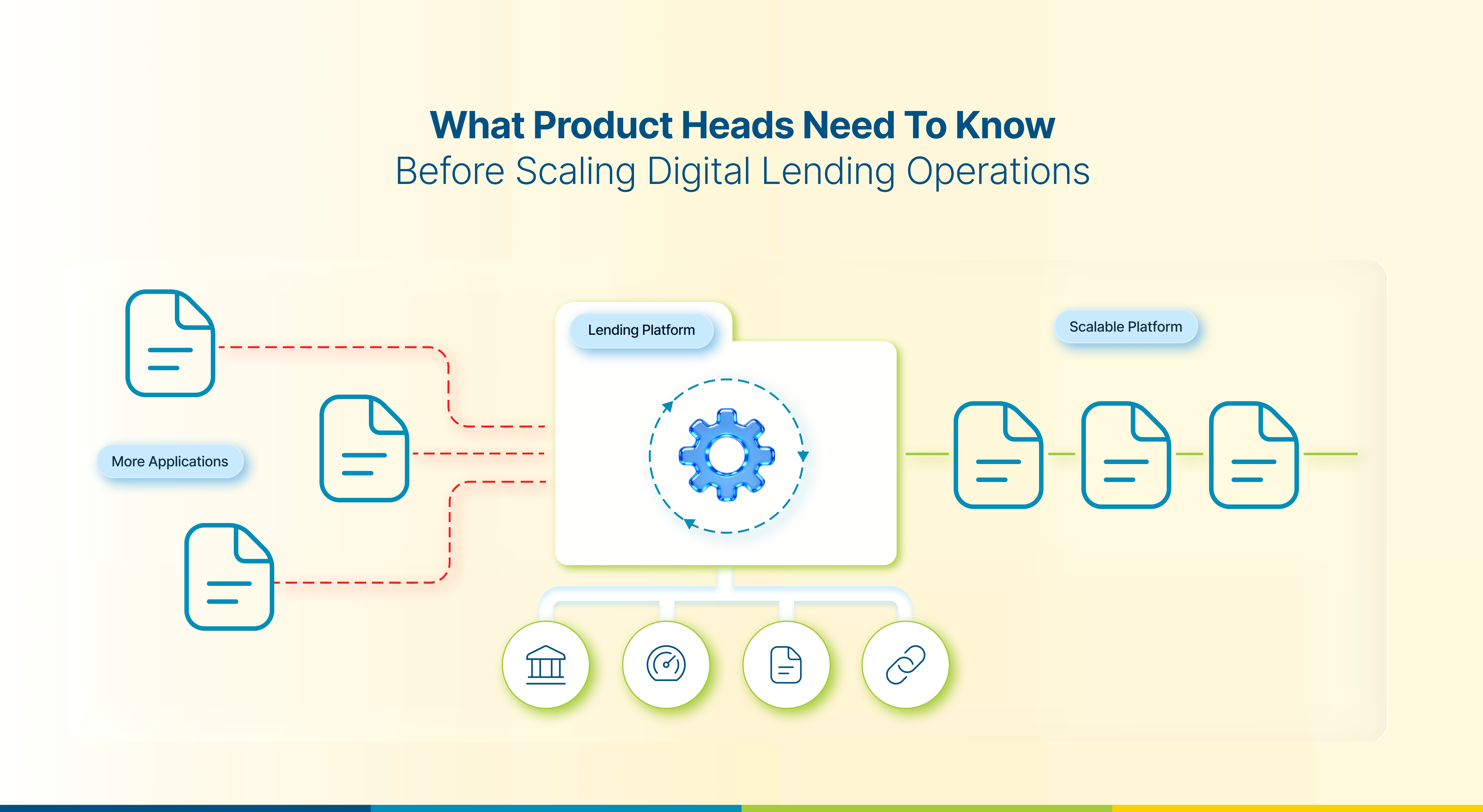
Growth exposes the parts of a lending operation that were easy to overlook when volumes were smaller.
A team might manage application reviews manually, work around a few awkward integrations, or rely on experienced underwriters to resolve exceptions. That can work when the portfolio is relatively small. As volumes increase, those same workarounds start showing up as longer turnaround times, inconsistent decisions, operational overhead, and more pressure on technology and risk teams.
For product heads, the challenge isn’t simply whether the digital lending platform can process more applications. It’s whether the underlying workflows, decisioning, integrations, controls, and data infrastructure can handle more volume without creating more manual work and operational risk.
That assessment is best made before growth puts the system under pressure. The sections below look at the areas where lending operations typically start to strain, and what product teams should evaluate in their digital lending platform before scaling further.
What Changes When a Lending Business Starts Scaling?
Scale doesn't just mean more applications. It changes the nature of almost every part of the operation.
A process that works well at a few hundred applications can start creating delays, errors, and extra workload when the same process has to support several thousand. For product heads, the important question is where those pressures are likely to appear first.
Application volume
A digital lending platform that processes a few hundred applications a month can often absorb inefficiencies through manual review. At higher volumes, that stops being practical.
Small delays in verification, document collection, or application routing can quickly turn into backlogs. That can push up turnaround times and leave teams spending more effort on moving applications through the process than actually evaluating them. A stronger loan origination software setup can automate much of this movement and keep applications progressing as volume increases.
Product complexity
Scaling usually brings more than a larger customer base. Lenders may add new loan products, customer segments, pricing structures, eligibility criteria, and approval conditions.
Each variation adds another layer to the lending process. A platform that was designed around one simple workflow can become difficult to manage when every product requires different rules. The goal is to support those differences within the same system rather than create separate processes that are difficult to maintain and update.
Manual operations
Manual work becomes one of the first pressure points as lending volume increases. Teams may still need people for exceptions and complex cases, but routine tasks such as document checks, data entry, status updates, and application routing do not need the same level of human involvement.
This is where lending automation becomes useful. Automating repeatable steps helps operations teams handle more applications without simply adding more people to the process.
Credit decisioning
Underwriting also changes as the business grows. At smaller volumes, experienced underwriters can rely on their judgment to handle individual applications. That becomes harder when more people are making decisions across a much larger pool of borrowers.
Without consistent rules, similar applications can receive different outcomes depending on who reviews them. A platform with configurable decisioning makes lending policies easier to standardize and update.
It also gives product and risk teams more control over how those policies are applied as products change. This is especially relevant when evaluating rule-based vs AI credit decisioning.
Data requirements
More applications also mean more data to collect, validate, and use. Credit bureau information, bank data, identity details, financial documents, and repayment history may all be needed at different points in the lending process.
The problem is not simply having more data. It is being able to access the right information without jumping between systems. When information is spread across disconnected tools, teams spend more time reconciling records and less time using them.
Data silos in lending can therefore become a much bigger issue as the portfolio grows.
Integrations
A growing lender will often need more external connections as well. New credit data providers, verification services, payment systems, e-signature tools, and partner channels may all become part of the lending stack.
Each integration adds another dependency that needs to work reliably with the rest of the process.
A digital lending platform should make it possible to add or change these connections without rebuilding core workflows. Otherwise, a new partnership or product launch can create a technology bottleneck of its own.
Compliance
Expansion can also make compliance more difficult to manage. Different products, customer types, and markets can introduce additional requirements, while higher volumes leave less room for manual checks.
A missed rule or inconsistent process can affect many applications before the issue is identified. Compliance therefore needs to sit within the lending workflow rather than depend entirely on separate manual reviews.
Lenders evaluating this area can also look at how loan management software simplifies regulatory compliance.
Fraud and risk
More applications mean more cases for risk teams to assess and more opportunities for suspicious activity to blend into normal application traffic. Manual review alone becomes difficult to maintain when volumes rise quickly.
Risk controls need to identify unusual patterns without slowing down every borrower. Real-time data and automated rules can help separate routine applications from cases that need closer attention. As the portfolio becomes larger, real-time lending intelligence also becomes valuable for identifying changes in risk after origination.
Customer experience
The borrower does not see the internal systems behind the lending process. They see how long the application takes, how many times they are asked for information, and how quickly they receive a decision.
That makes customer experience another scaling issue. A platform that becomes slower or more dependent on manual handoffs as volume grows can create friction at exactly the point when the lender is trying to grow.
Keeping pace with borrower expectations in digital lending means maintaining a process that stays simple even as the operation behind it becomes more complex.
None of these changes happen in isolation. Higher application volumes increase the need for automation, new products add decisioning and compliance requirements, and growing data volumes put more pressure on integrations and reporting.
For product heads, scaling therefore means looking beyond whether the platform can process more applications.
The bigger question is whether it can support more volume, complexity, and risk without creating a matching increase in manual work.
Scale doesn't just mean more applications. It changes the nature of almost every part of the operation.
7 Things Product Heads Should Evaluate Before Scaling Digital Lending
Before pushing more volume through the system, it's worth checking whether the digital lending platform itself is ready for it.
1. Loan origination workflow
Look at how applications move from intake to decision today. If the workflow depends on someone manually moving a file between stages, that step becomes a bottleneck the moment volume increases.
A scalable digital lending platform should route applications automatically based on rules, not manual handoffs. Map out every point in the current process where a human decides what happens next, since each of those points is a place growth will eventually slow down.
2. Credit decisioning and underwriting
Check whether underwriting logic is documented and consistent, or whether it lives in individual underwriters' heads.
A digital lending platform that supports configurable decisioning rules lets you scale volume without scaling inconsistency. This also matters for fair lending and audit purposes, since undocumented judgment calls are hard to defend when a regulator or auditor asks why two similar applications received different outcomes.
3. Automation and straight-through processing
Straight-through processing, where simple applications move from intake to approval without manual touch, is one of the clearest signals of a mature digital lending platform.
McKinsey's research on digital lending has found that leading banks can move 70 to 80 percent of straightforward lending decisions through fully automated flows, reserving manual review for complex or borderline cases.
If your platform can't do this today, scaling will mean hiring at the same rate as volume grows, instead of ahead of it.
4. API and third-party integrations
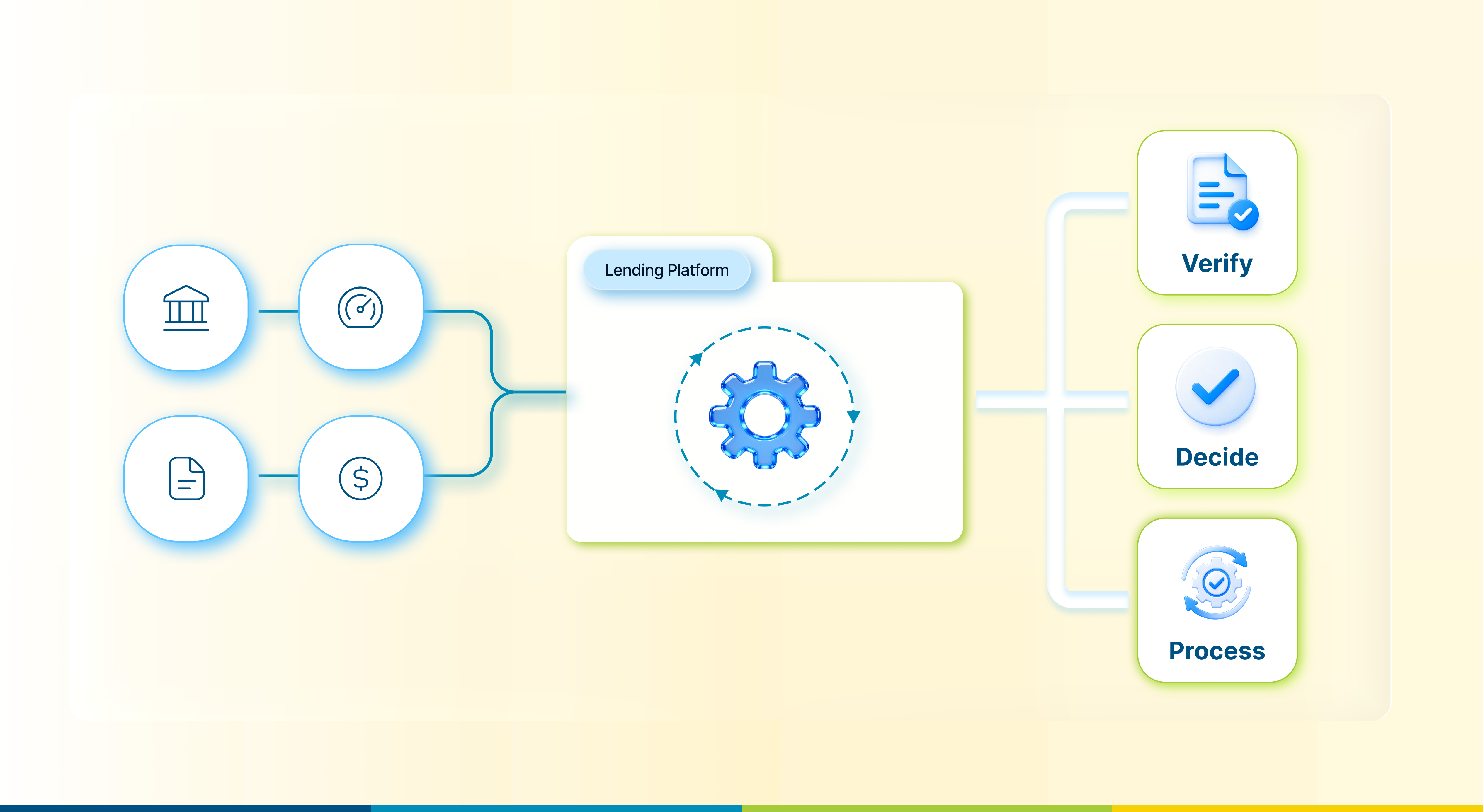
A digital lending platform needs to connect cleanly to credit bureaus, bank verification tools, e-signature providers, and payment processors.
Evaluate how easily new integrations can be added, since scaling often means onboarding new partners or channels faster than the original system was designed for. A platform that requires custom development for every new connection will always lag behind a lender adding partners on a quarterly basis.
5. Scalability and system performance
Ask how the platform performs under load, not just how it performs today. A digital lending platform that works well at current volume but hasn't been stress-tested for 5x or 10x that volume is a risk you're deferring, not avoiding.
This matters just as much for infrastructure as it does for the people and processes wrapped around it, since a system slowdown during peak hours often surfaces first as a support ticket, not an engineering alert.
6. Risk, fraud, and compliance controls
Confirm the platform can enforce compliance rules automatically across products and jurisdictions, and that fraud detection runs in real time rather than as a periodic manual check.
Deloitte's research on fintech risk has found that a large share of scaling institutions consider compliance requirements one of their biggest operational challenges, with real financial losses tied to gaps in this area. A digital lending platform built to handle this at scale removes a significant source of that risk.
It also means new products or new state launches don't each require a separate, manually built compliance layer.
7. Analytics and portfolio visibility
As volume grows, so does the value of understanding portfolio performance in real time. A digital lending platform should surface delinquency trends, approval rates, and product performance without requiring a separate reporting exercise every time leadership asks a question.
Without this, product and risk teams end up making decisions on numbers that are already a month old by the time they reach a meeting.
Scaling Readiness at a Glance
Bringing It Together
None of these seven areas work in isolation. A digital lending platform that automates origination but can't scale its integrations will still create bottlenecks.
One that handles compliance well but lacks real-time analytics will leave leadership making decisions on outdated numbers. The lenders that scale smoothly tend to treat these as one connected system rather than seven separate projects.
Our guide on creating a fully automated lending workflow walks through what that looks like in practice, end to end.
Product heads often assume this evaluation only matters right before a scaling push. In practice, the lenders who fare best treat it as a recurring exercise, revisiting their digital lending platform every time a new product, market, or partner channel is added, rather than waiting for volume alone to expose the gaps.
A unified lending platform built on one connected system tends to hold up far better under this kind of repeated stress than a stack of point solutions patched together over time.
Final Thoughts
Scaling digital lending operations isn't really a volume problem. It's a readiness problem. The lenders who scale without friction are the ones who evaluated their digital lending platform honestly before growth forced the question, not after.
Waiting until the backlog builds up or the fraud losses show up in a quarterly report almost always costs more, in both money and customer trust, than addressing these gaps ahead of time.
Finspectra's Prizm Lending Suite is built for exactly this stage, with automated origination, configurable decisioning, and portfolio-wide analytics on one connected platform, so scaling volume doesn't mean scaling headcount or risk at the same pace.
Book a demo to see how Prizm supports lenders scaling from a few hundred to several thousand applications a month.
FAQs
What is needed to scale digital lending operations?
Scaling digital lending operations needs a digital lending platform that can automate origination, apply consistent underwriting rules, integrate with new data sources and partners easily, and maintain performance and compliance as volume grows, without requiring proportional headcount growth. It also needs a product team willing to revisit these areas regularly rather than treating the platform as a one-time setup.
What features should a digital lending platform have?
A digital lending platform should include automated origination workflows, configurable credit decisioning, straight-through processing for simple applications, strong API and integration support, real-time fraud and compliance controls, and portfolio-level analytics.
How can lending software help scale loan operations?
Lending software helps scale loan operations by automating manual steps like document review and application routing, applying consistent decisioning rules across every file, and surfacing portfolio performance in real time, so growth in volume doesn't require growth in manual effort at the same rate. This is closely tied to having the right loan origination software in place from the start.
What challenges do lenders face when scaling digital lending?
Common challenges include manual workflows that can't keep pace with volume, inconsistent underwriting across a growing team, integration gaps as new partners and data sources are added, and compliance tracking that breaks down across multiple products or states. Most of these challenges surface gradually, which is why they often go unnoticed until volume has already outpaced the system.
How do you choose a scalable digital lending platform?
Choosing a scalable digital lending platform means evaluating its automation depth, how easily it integrates with third-party tools, whether it has been tested at higher volumes, and whether it can enforce compliance and surface analytics automatically rather than through manual effort.
.png)

.png)
.png)


